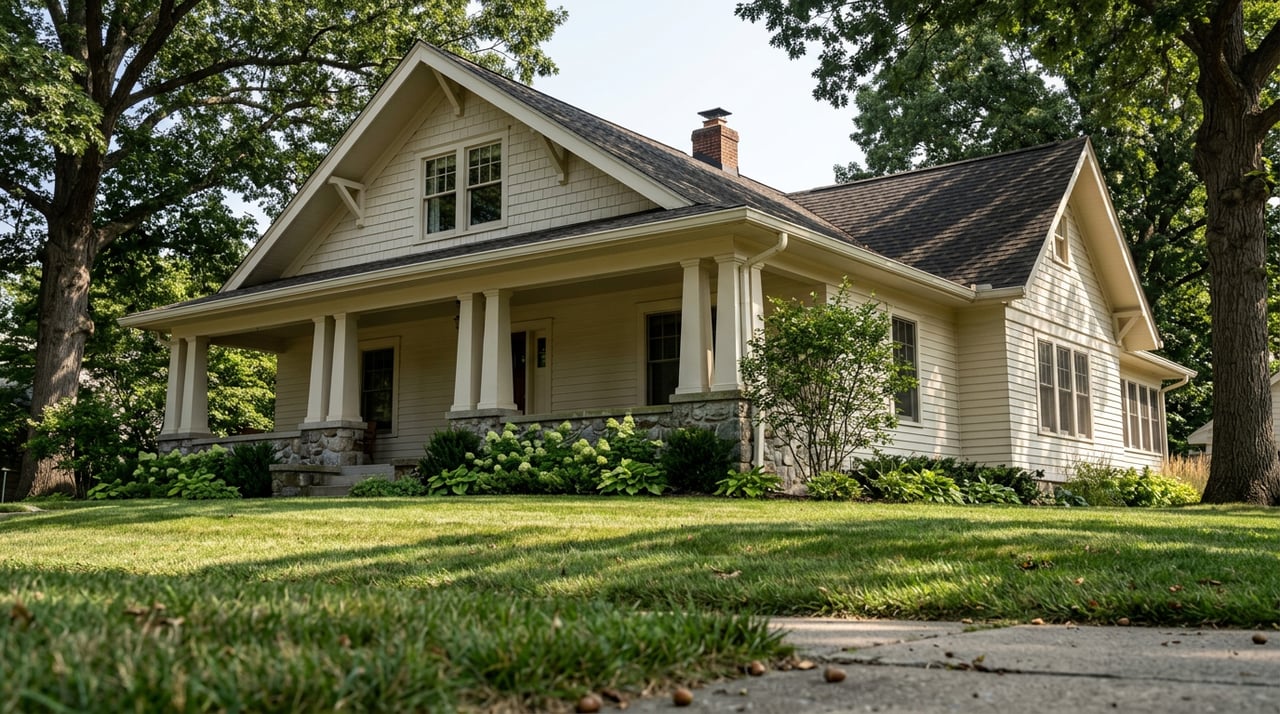
Most people assume the National Register of Historic Places is what protects a neighborhood like Edina's Country Club District. It sounds official.
What actually controls whether you can replace a window, build a garage, or tear down a house on Wooddale Avenue is a local ordinance. And as of January 1, 2026, Edina's Heritage Preservation Ordinance comes with something it never had before: a cash escrow you write a check for before the city lets you touch a street-facing facade. If you're buying, selling, or planning work inside this 14-block district, that change is worth understanding before you're the one standing at the counter.
The National Register Listing Doesn't Do What People Think
The Country Club District was added to the National Register of Historic Places in 1980, recognizing it as one of the first planned communities in Minnesota, platted in 1924 by Thorpe Brothers Realty Company. That designation gets cited constantly in listing descriptions and neighborhood guides, and it genuinely matters for the district's identity.
The actual control sits with the City of Edina's local heritage preservation ordinance, which covers the same 555 dwellings across the area bounded by Minnehaha Creek to the west, Sunnyside Road to the north, Arden Avenue to the east, and West 50th Street to the south. That ordinance requires a Certificate of Appropriateness, or COA, before the city issues a building permit for demolition, new construction, or significant structural changes to any facade visible from the street. Routine repairs and in-kind maintenance generally don't trigger it. Replacing a window with a different size, adding a garage, or reworking a front gable does.
Edina's own code governs your renovation timeline, and it just got sharper teeth.
What Changed On January 1
The Edina City Council approved Ordinance 2024-06 and Resolution 2024-77, updating the Heritage Preservation Commission's authority and the Country Club Plan of Treatment. Both took effect January 1, 2026. The headline change for anyone with a project in the district is a new escrow requirement tied to any building permit for exterior work.
| Project valuation | Escrow required |
|---|---|
| Over $100,000 | $15,000 |
| Under $100,000 but still requiring a COA | $3,000 |
The city holds the escrow through construction. Once the permit closes out and the work matches the approved COA, the escrow comes back. In plain terms, the city added an escrow, not just a design review.
The push for this came directly from residents inside the district. Public comment on the proposal specifically supported the escrow as a guard against what one resident called demolition by neglect, the practice of stalling a project long enough that the original structure degrades past the point of saving. That's a real pattern in historic districts nationally, and Edina's version of the fix is a deposit, not just a design guideline.
What This Looks Like In Practice
The Certificate of Appropriateness process isn't theoretical. It runs through the Heritage Preservation Commission on a regular meeting cycle, and public case files from that process show the range of projects that actually come through it:
- A new detached garage proposed for a property on Casco Avenue
- An addition to the rear of a home on Bruce Avenue, built in 1936, paired with a new detached garage
- A new covered front entry on Wooddale Avenue, following an earlier approved garage on the same lot
- A facade change on Sunnyside Road involving window replacement and roofline adjustments to a home built in 1926
None of these are unusual renovation requests. They're the kind of updates any owner of a century-old home eventually wants. The difference in the Country Club District is that each one needs commission review before a permit, and now, if the exterior work crosses that valuation line, an escrow check before the permit is issued at all.
Sequencing A Sale Or Purchase Around This
If you're selling a Country Club District home with an active or recently approved COA, that paperwork matters as much as the home inspection. Buyers and their agents should be asking whether any exterior project is mid-review, whether an escrow is currently held by the city, and whether it's on track to be returned. An unresolved COA is more than a design question.
If you're buying with renovation plans already in mind, the sequence changes too. Budget for the possibility of a $3,000 or $15,000 escrow on top of your project cost, and build the COA timeline into your renovation schedule rather than assuming you can pull a permit the week you close. The commission meets on a set cycle, not on demand, and a project can be continued to a later meeting at an applicant's request, which has happened with past cases in the district.
None of this makes the district harder to love. It makes it a place where the paperwork now has a dollar figure attached, and that's worth knowing before you write an offer, not after.
Why This Only Applies Inside The Boundary
The escrow and COA requirements apply specifically to the platted Country Club District boundary. A home two blocks outside that boundary, even one from the same era, isn't subject to this review. That boundary line is exactly why knowing whether an address sits inside or outside the district matters more than knowing the home's age. Two houses built in the same decade a few streets apart can face entirely different renovation paths.
Frequently Asked Questions
Does the escrow apply to interior renovations? No. The ordinance and the escrow tie specifically to building permits for exterior work covered by the Certificate of Appropriateness process, meaning street-facing facades, demolition, and new construction. Interior remodeling that doesn't touch the exterior isn't subject to COA review or the escrow.
How long is a Certificate of Appropriateness valid once approved? According to Better Together Edina, a building permit needs to be applied for within one year of COA approval. The applicant can request a one-time extension from the Heritage Preservation Commission before the original approval expires.
Can I find out if a specific address has an open or past COA before I make an offer? Yes. Certificate of Appropriateness applications and public comment for the district are posted for review ahead of each Heritage Preservation Commission meeting, and that history is a reasonable thing to check before finalizing an offer on a Country Club District property.
If you're weighing a purchase, sale, or renovation inside the Country Club District, or trying to figure out whether an address you're considering even sits inside the boundary, Smitten Real Estate Group can walk through the specifics with you. Let's Connect.
This article is general information, not legal, tax or financial advice. Consult a qualified professional about your situation.