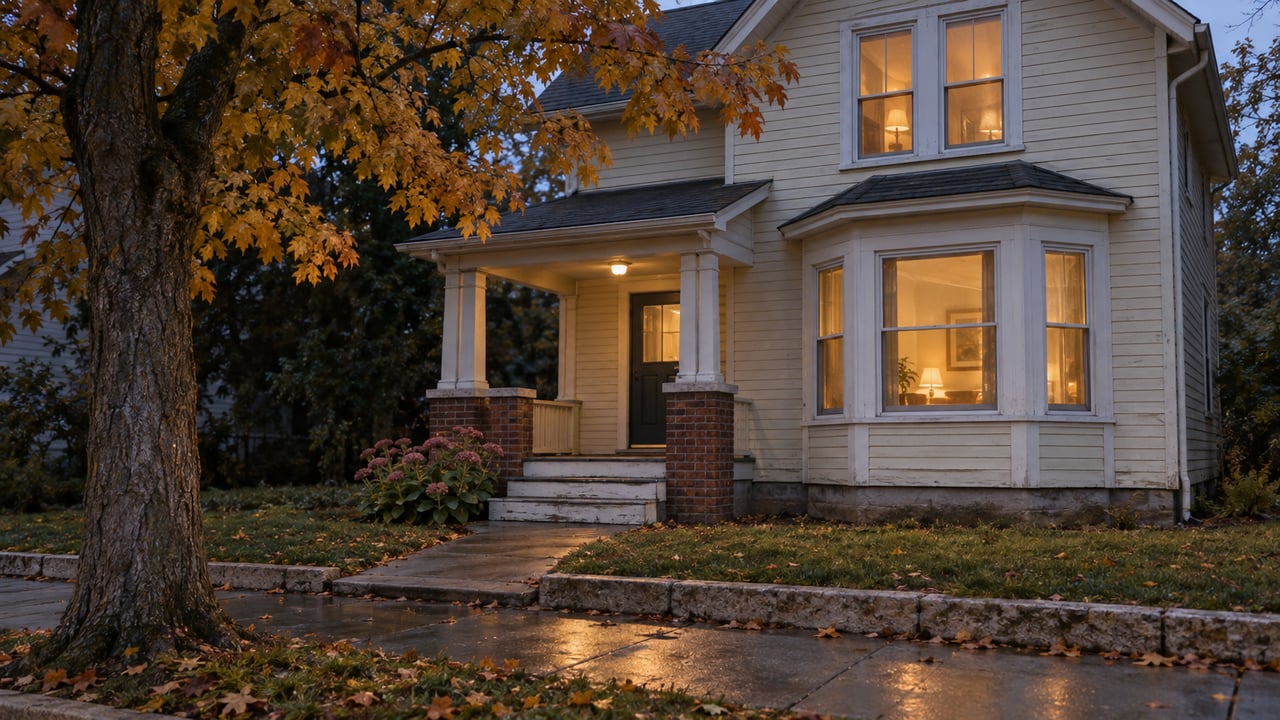
Picture a buyer a few weeks from closing on a hundred-year-old home in Stillwater's North Hill. The inspection turned up nothing alarming. The appraisal came in at value. Then the insurance underwriter calls with a question nobody budgeted time for: is the original wiring still in the walls?
That single question can add thousands of dollars and a delayed closing date to a transaction that looked finished. It has nothing to do with the price on the listing. A $1.2 million bluff estate near the river and a $480,000 cottage two blocks off Main Street can hit the exact same wall, because the variable that actually predicts insurance trouble in Stillwater isn't what the home costs. It's the decade it was wired.
That distinction matters more than it sounds like it should, because Stillwater's median home price, the number every buyer sees first, doesn't measure it at all.
The Median Is Measuring Two Different Kinds of Age
Stillwater has two very different growth stories happening at once, and they get flattened into a single citywide figure. On one side is a historic core, mostly North Hill and South Hill, full of Victorian and early-1900s homes with original woodwork, wraparound porches, and detached carriage houses. That inventory is fixed. Stillwater isn't building more of it, and local heritage preservation guidelines shape what can change on the exterior of homes in that district.
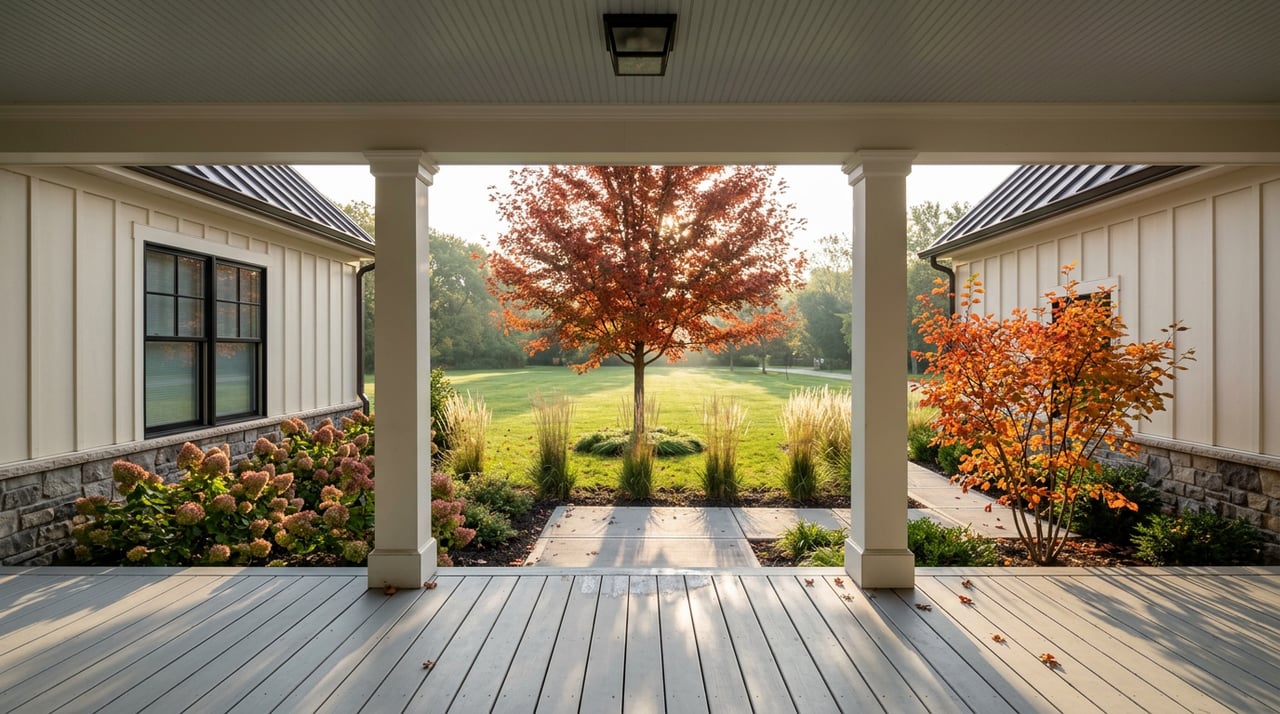
On the other side is a town that keeps adding new construction, and it's adding it at every price point, not just the entry level. Liberty on the Lake, Stillwater Crossing, Terra Springs, and Croixwood sit at the more accessible end. Legends of Stillwater, Oak Glen, and Interlachen Hills sit in the middle. And out toward the river bluff, newer luxury developments like Brown's Creek Preserve, Bay Lake Reserve, and Galway are putting up homes that can run well past $700,000, sometimes past $1 million, with modern wiring, modern panels, and none of the underwriting friction that shows up in the historic core.
That's the part a median obscures. A high price doesn't mean a home is new. A low price doesn't mean a home is old. Stillwater has expensive old houses and expensive new houses, and only one of those categories comes with a wiring conversation.
| Segment | Representative areas | What defines it |
|---|---|---|
| Historic core | North Hill, South Hill | Victorian and early 1900s construction, fixed supply, heritage guidelines govern exterior changes, original electrical systems common |
| New luxury construction | Brown's Creek Preserve, Bay Lake Reserve, Galway, Shores of Lake McDonald | Recently built, river or bluff proximity, high price point, modern systems |
| New mid and entry construction | Liberty on the Lake, Stillwater Crossing, Terra Springs, Croixwood, Legends of Stillwater, Oak Glen | Built mostly since the 1980s and 90s, more accessible pricing, still adding inventory today |
Why Nobody's Number Agrees With Anybody Else's
If you've already looked at a couple of sources for Stillwater's market, you've probably noticed the numbers don't line up, and the gap isn't small.
On September 8, 2026, two different real estate sites pulled a Stillwater snapshot on the same day. One counted 116 active listings with a median list price of $550,000 and an average of $256 per square foot. The other counted 84 listings with a median list price of $499,900 and an average of $265 per square foot. Same market, same week, a $50,000 difference in the median depending on which slice of inventory got counted.
Zoom out further and the range widens. One home value estimator put Stillwater's average value at $443,631 as of June 2026. A different aggregator's July 2026 snapshot put the median list price at $619,000. Trailing twelve month closed sales data put the median sale price at $496,000, up 14 percent year over year.
None of these numbers are wrong. They're measuring different things: active listings versus closed sales, single-family homes versus every property type, one week's inventory versus a rolling twelve months. But the deeper reason the spread is this wide is the same reason the two-segment table above matters. When historic-core Victorians, brand-new bluff estates, and west-side new construction all get folded into one citywide average, small shifts in which properties happen to be listed that week can swing the median by tens of thousands of dollars. A single number was never going to describe three structurally different housing stocks well.
The Insurance Bill That Doesn't Show Up in the Listing Price
Here's where the age question turns into real money. Knob-and-tube wiring, the ceramic-knob-and-tube system used in most American homes built before the 1940s, is still present in a meaningful share of Stillwater's historic core. It isn't illegal to own. It's legal to live with indefinitely. But most standard insurance carriers will decline to write a policy on a home that still has it, and the carriers that will write one typically charge a materially higher premium.
Replacing knob-and-tube wiring generally runs $3,500 to $9,000 depending on the size and complexity of the home, according to insurance industry estimates. Some carriers will offer coverage only on the condition that the wiring is replaced within 30, 60, or 90 days of closing, which means a buyer needs to know before they waive their financing contingency whether they can actually fund that work on that timeline. Others will only offer a more limited HO-8 policy, built specifically for older homes, that caps what it pays out relative to a standard policy.
None of this shows up on a comparative market analysis. It shows up during underwriting, often after a buyer has already committed emotionally and financially to a specific address. For a North Hill or South Hill purchase, getting a licensed electrician to inspect the wiring before writing an offer, not after it's accepted, is the difference between a clean closing and a scramble in the final two weeks.
Why This Gap Isn't Closing Anytime Soon
It would be reasonable to assume Stillwater's inventory eventually evens out and the median stops swinging so much. The opposite looks more likely, at least for the next few years.
The city's spring 2026 development update outlined two projects moving forward on the west side. HealthPartners is building a new six-story, 400,000-square-foot Lakeview Hospital campus at the northeast corner of Highway 36 and Manning Avenue, with an outpatient cancer center, cardiac center, orthopedics clinic, and emergency room. As of that update, elevator shafts and structural steel were already rising on the site. A few blocks away, the Planning Commission recommended approval of Brixton Townhomes, a 108-unit for-sale development at Manning Avenue and Boutwell Road, arranged in two-story buildings of four to six attached units.
Both projects sit squarely in the new-construction corridor, not the historic core. They add jobs, services, and housing supply exactly where Stillwater already builds new inventory, which means that side of the market keeps growing while North Hill and South Hill stay fixed by geography and preservation rules. The gap between the two segments isn't a temporary market quirk. It's a structural feature of how the city is built, and it's likely to persist as long as new development keeps landing on one side of town and heritage guidelines keep the other side essentially frozen.
What This Actually Means If You're House Hunting Here
If you're comparing homes across Stillwater, the citywide median is a poor tool for narrowing a search. A few better questions:
- Was this home built before the 1940s? If so, ask directly whether the original wiring is still active before you fall in love with the floor plan.
- Are you comparing per-square-foot pricing within the same segment (historic core to historic core, new construction to new construction), or across segments where the comparison doesn't hold?
- If you're buying in North Hill or South Hill, have you gotten a homeowners insurance quote before your inspection contingency expires, not after?
- If price per square foot looks unusually low for a historic-core address, ask why. It's sometimes value. It's sometimes a wiring or systems issue baked into the number.
A Few Direct Questions
Is Stillwater a buyer's market or a seller's market right now? It depends heavily on segment and price bracket. Inventory under $500,000 has stayed tight through 2026, which keeps pressure on sellers in that range, while homes at higher price points in newer developments have generally taken longer to move.
Do I have to rewire a historic home before I can get a mortgage? Not always, but it depends on your lender and insurer. Some will approve a loan contingent on an insurance binder, and some insurers will only issue that binder if the wiring is replaced within a set window after closing. Get quotes early rather than assuming it will work out.
Are all North Hill and South Hill homes affected? No. Many historic homes have already been partially or fully rewired by previous owners. The only way to know is a licensed electrician's inspection, which is a different scope than a standard home inspection.
Stillwater rewards buyers and sellers who understand which of its markets they're actually in, not the one blended average that gets quoted everywhere. If you're weighing a historic-core purchase against new construction on the west side, or trying to price a listing against comps that may not be measuring the same thing, Smitten Real Estate Group can walk through the segment-specific data with you. Let's Connect.